

Best RFID Wallet Consumer Search Analysis January 2026: CardShield Carbon Fiber Wallet Examined as RFID-Blocking Technology Adoption Accelerates
Independent Category Assessment of 13mm Front-Pocket Form Factor, 22-Card Capacity, 13.56MHz Frequency Protection, and Suitability Framework for Minimalist Wallet Users
SAN FRANCISCO, CA, Jan. 07, 2026 (GLOBE NEWSWIRE) -- Disclaimer: This article is for informational purposes only. It is not security advice, financial advice, or professional guidance. This article may contain links that result in a commission at no additional cost to the reader.
Search Term Context: This report uses "best" phrasing to reflect consumer search behavior and category language; it is not a ranking or endorsement.
The phrase "best RFID wallet" appears frequently in consumer search behavior, particularly as interest in contactless payment security grows. Rather than indicating a universal ranking, the term typically reflects an evaluation process in which shoppers compare wallet thickness, card capacity, materials, and RFID frequency coverage to identify a solution aligned with their individual carry preferences.
Because carry style, card count, and security priorities vary significantly, the phrase "best RFID wallet" is generally best interpreted as a fit question rather than a universal ranking. This interpretation reflects how many consumers actually use the term during research rather than an expectation of a single objectively superior product.
Interest in terms like "best RFID wallet" is commonly discussed more in early January than late December in many consumer categories, reflecting seasonal organization timing and New Year resolution behavior within the RFID-blocking wallet accessory category, based on commonly observed seasonal search behavior. The search term represents consumer interest in wallets designed with electronic shielding technology intended to help reduce unauthorized proximity scans of contactless cards—a category that has grown alongside expanding contactless payment adoption and increasing consumer awareness of electronic data protection.
CardShield (source: brand-published product information), operated by UAB Rara Digital based in Lithuania, represents one brand addressing this consumer search intent with a carbon fiber RFID-blocking wallet that, according to brand-published materials, is intended to help reduce unauthorized 13.56MHz contactless scans while maintaining a slim front-pocket profile.
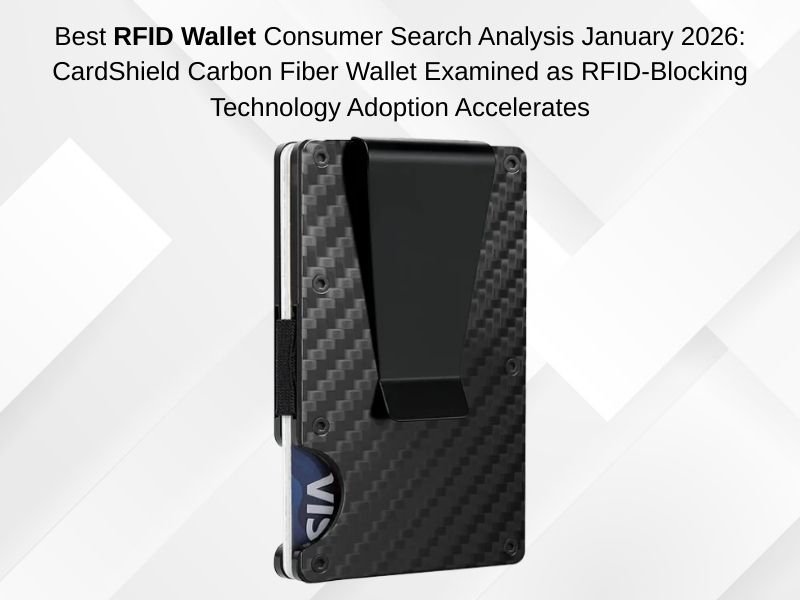
Category observations suggest consumers searching "best RFID wallet" often evaluate several priority factors: RFID-blocking effectiveness (frequency ranges protected), card capacity (total cards accommodated), form factor compatibility with front-pocket carry (thickness specifications), material durability considerations, and integrated features (money clip functionality versus billfold design). This analysis examines CardShield specifications within the broader category context to help consumers searching "best RFID wallet" assess category fit during research.
What Drives "Best RFID Wallet" Consumer Search Behavior
Observed consumer discussion themes suggest people often arrive at the query "best RFID wallet" through several common pathways:
Digital Security Awareness Path: Consumer behavior discussions often suggest individuals have encountered news coverage, social media content, or personal acquaintance experiences regarding contactless card skimming and are conducting research before addressing perceived vulnerability. The "best" qualifier in search behavior reflects interest in confirming which blocking technologies address specific frequencies, comparing published specifications, and evaluating whether marketed protection aligns with actual contactless payment security requirements.
Traditional Wallet Replacement Path: Consumers whose leather wallets have stretched, cracked, or deteriorated specifically search "best RFID wallet" to identify replacements addressing both durability and modern security considerations, according to commonly discussed themes in minimalist wallet communities. This path reflects dual motivation: material alternatives plus protection addition.
Minimalist Wallet Transition Path: Consumers transitioning from traditional bulky billfolds to front-pocket slim designs often search for RFID protection as part of the transition, seeking solutions that combine slim profiles with card security rather than requiring separate RFID-blocking sleeves or inserts.
New Year Organization Path: Post-holiday consumers implementing organization resolutions search for wallet alternatives addressing multiple considerations simultaneously—pocket bulk reduction, card organization improvement, and digital security enhancement—positioning RFID wallets as "life organization" tools aligned with January goal-setting behaviors.
The "Best" Variation by Individual Priority: Consumers searching "best RFID wallet" are typically using shorthand for "which RFID wallet matches my specific requirements"—an evaluation framework rather than universal product ranking. Consumer priorities vary significantly based on several factors:
- Front-pocket carriers prioritize thickness specifications
- High card count users prioritize capacity without sacrificing slim profile
- Cash carriers prioritize integrated money clip or bill compartment functionality
- Durability-focused consumers prioritize material longevity considerations
- Travel-conscious users prioritize comprehensive frequency coverage for international card standards
Understanding this search intent framework explains why manufacturers position specifications addressing these distinct priorities rather than making universal claims across all use cases.
Search Term Clarification: The term "best RFID wallet" reflects common consumer search terminology addressing contactless card protection. RFID-blocking wallets typically use conductive materials and shielding approaches often described as "Faraday-style" protection to help reduce unauthorized 13.56MHz scans—the frequency used by most contactless credit cards, transit passes, and access cards. Protection effectiveness varies by wallet construction and blocking technology implementation.
Understanding RFID-Blocking Technology: Category Education Framework
Before evaluating specific products, consumers benefit from understanding what RFID-blocking wallets do and do not accomplish—context that informs realistic expectations regardless of brand selection.
What RFID-Blocking Wallets Address: RFID-blocking technology targets unauthorized proximity scanning of contactless cards. Most modern payment cards, transit passes, and access credentials utilize 13.56MHz frequency for tap-to-pay functionality. RFID-blocking materials are designed to create a shielding effect that, according to brand descriptions and general category explanations, can reduce the likelihood of card readers activating contactless chips while cards remain stored inside the wallet.
13.56MHz vs. 125kHz Frequency Distinction: Contactless payment cards (Visa payWave, Mastercard PayPass, American Express ExpressPay) and most modern transit passes operate at 13.56MHz—the frequency most RFID-blocking wallets address. Some older building access cards and certain proximity credentials operate at 125kHz, which represents different technology requiring different blocking approaches. Consumers with specific access credential protection requirements commonly factor frequency compatibility into their evaluation of RFID-blocking products.
What RFID-Blocking Wallets Do NOT Prevent:
- Data breaches at retailers: Card information stolen from merchant databases occurs independently of wallet protection
- Online fraud: Stolen card numbers used for e-commerce transactions
- Phishing attacks: Social engineering schemes extracting card details
- Physical card theft: RFID blocking does not prevent someone from taking the wallet
- ATM skimming devices: Hardware attached to payment terminals captures card data during legitimate transactions
- Chip-reading during legitimate purchases: Card data captured during normal payment processing
RFID blocking represents one security layer addressing one specific vulnerability vector. It supplements rather than replaces comprehensive fraud prevention practices including statement monitoring, fraud alerts, and prompt reporting of suspicious activity.
Independent Assessment Context: Some consumers look for general reassurance that RFID-blocking is functioning by noting whether contactless cards respond while stored inside a wallet, recognizing that results can vary.
For many consumers, the goal is less about predicting fraud and more about adding a practical precaution layer aligned with modern contactless payment habits.
CardShield Form Factor: Thickness and Card Capacity Analysis
According to brand-published specifications on the official CardShield website as of January 2026, the wallet measures approximately 13mm (0.5 inches) thick with credit card-sized dimensions designed for front-pocket carry while accommodating up to 22 cards in a single organized slot.
Thickness Context: Traditional wallets can become noticeably thicker when loaded with cards and cash, which is one reason some consumers explore slimmer formats. According to brand-published specifications, CardShield's 13mm profile represents a slimmer alternative enabling front-pocket positioning.
Wallet Type Compatibility Considerations:
Category discussions commonly describe varying thickness tolerance based on carrying preferences:
Front-Pocket Carriers: Consumers who prefer front-pocket carry for comfort or security reasons show higher sensitivity to thickness specifications. According to brand-published specifications, the 13mm profile positions within the slim category compatible with front pockets, though individual fit varies by pant style and pocket dimensions.
Back-Pocket Carriers: Traditional back-pocket users may experience different comfort characteristics from slimmer designs compared to traditional leather billfolds, with individual preferences varying.
22-Card Capacity Assessment: According to brand-published specifications, CardShield accommodates 1-22 cards within its single flexible slot design. Consumer discussions commonly note that actual comfortable capacity depends on card thickness (embossed cards consume more space than flat designs) and individual organization preferences.
Current CardShield thickness specifications and card capacity information are available through brand-published specifications.
CardShield RFID-Blocking Technology: Specification Analysis
According to brand-published materials, CardShield incorporates a carbon fiber core with an embedded RFID-blocking layer intended to reduce unauthorized scans of 13.56MHz contactless cards. As with all RFID-blocking products, effectiveness depends on construction, card type, and how cards are positioned within the wallet.
Protected Card Types (Per Brand-Published Materials):
According to brand specifications, protection is designed to extend to:
- Contactless credit and debit cards (Visa payWave, Mastercard PayPass, American Express ExpressPay)
- Transit passes (metro cards, bus passes with tap functionality)
- Building access cards (office entry credentials operating at 13.56MHz)
- Hotel room keys (RFID-enabled key cards)
Frequency Limitation Clarification: According to brand-published FAQ materials, CardShield's 13.56MHz blocking addresses high-frequency RFID standards used by payment cards and most modern access credentials. The brand notes that building access cards operating at 125kHz may still be scannable through the wallet and may need to be removed for scanning in some access control systems.
CardShield RFID-blocking specifications and frequency coverage details are published through brand documentation.
Carbon Fiber Construction: Material Analysis
Understanding carbon fiber material properties provides context for evaluating wallet construction approaches compared to traditional materials, based on commonly described material characteristics.
Carbon Fiber Material Characteristics:
Carbon fiber composite materials offer several properties relevant to wallet construction:
Structural Characteristics: Carbon fiber maintains shape under repeated stress without permanent deformation patterns commonly associated with leather stretching over time.
Surface Properties: The material surface demonstrates resistance to scratching from keys, coins, and pocket friction according to commonly described material characteristics.
Environmental Considerations: Unlike leather which can absorb moisture and develop water stains, carbon fiber maintains appearance through various environmental exposure conditions.
Brand Durability Positioning: The company markets the carbon fiber build as designed for long-term everyday use and resistance to common wear patterns seen in leather wallets. Actual lifespan varies based on use conditions and handling.
Integrated Money Clip: Feature Analysis
According to brand-published specifications, CardShield includes an integrated stainless steel money clip designed to hold folded bills while maintaining the wallet's profile.
Money Clip Design: The exterior-mounted money clip utilizes tension-calibrated design to grip folded currency. According to brand descriptions, the clip holds bills securely while keeping cash accessible.
Cash Carrying Considerations: Money clip functionality addresses consumers who carry both cards and cash. The exterior positioning means bills remain visible on the wallet exterior—which some consumers prefer for quick access and others may consider when evaluating their carrying preferences.
RFID-Blocking Wallet Category: Market Context for Consumer Evaluation
Within the RFID-blocking wallet category, product designs vary by thickness, card capacity, materials, and frequency coverage. Consumers typically compare published specifications across these factors to determine personal fit.
Thickness Specification Range Across Category: Across the RFID-blocking wallet category, brands commonly advertise a wide range of thickness profiles—from very slim minimalist designs to thicker traditional formats—based on their published specifications:
- Ultra-slim options: Minimal card capacity, maximum pocket friendliness
- Slim options: Moderate card capacity, front-pocket compatible
- Standard options: Higher card capacity, traditional bifold profiles
According to brand-published specifications, CardShield's 13mm measurement positions within the slim category.
Card Capacity Range Across Category:
Brand-published specifications across the category show variation in stated card capacity:
- Minimal capacity (4-8 cards): Ultra-slim designs prioritizing pocket profile
- Moderate capacity (8-15 cards): Balanced designs addressing typical daily carry
- High capacity (15-25 cards): Expanded designs for extensive card requirements
According to brand-published specifications, CardShield's 22-card maximum capacity positions at the higher end of the category.
RFID-Blocking Technology Approaches: Brands utilize various blocking technologies including metallic mesh lining, aluminum core construction, carbon fiber with conductive elements, and specialized RFID-blocking fabric. According to brand-published materials, CardShield utilizes carbon fiber construction with integrated blocking technology.
Material and Construction Approaches: Category analysis shows diverse material approaches including traditional leather with RFID lining, aluminum or titanium construction, carbon fiber composite, and synthetic materials with blocking fabric. Material choice affects durability characteristics, weight, aesthetic appearance, and price positioning.
Customer Commentary Context
The following examples reflect customer-submitted commentary presented on the brand's website and are included for informational context rather than as performance guarantees.
According to brand-published review sections, customer commentary themes include:
Pocket Profile Commentary: Some customers describe the wallet fitting in front pockets where previous wallets created bulk concerns.
Card Organization Commentary: Some customers describe improved card organization compared to previous wallet experiences.
Material Durability Commentary: Some customers describe the wallet maintaining appearance after extended use periods.
Individual experiences described reflect personal user feedback and may not represent typical results. Experiences vary based on card count carried, usage patterns, and individual expectations.
Brand Marketing Positioning Context
CardShield marketing materials describe the product as "America's #1 Rated RFID Wallet," which is presented as a brand positioning statement rather than an independently verified industry ranking.
The company positions CardShield as an alternative to traditional wallets, emphasizing differences in materials, pocket profile, and RFID-focused design rather than making a universal performance claim.
According to brand-published materials, the comparison table on the official website highlights differences between CardShield's carbon fiber construction and traditional leather wallet characteristics across several dimensions including RFID blocking, pocket profile, card capacity, and material durability considerations.
Limitations: What RFID-Blocking Wallets Cannot Accomplish
Setting realistic expectations requires understanding what RFID-blocking wallets are not designed to accomplish—regardless of specific brand selection.
Cannot Prevent All Forms of Card Fraud: RFID-blocking addresses one specific vulnerability vector—unauthorized proximity scanning of contactless card data. It does not protect against data breaches, online fraud, phishing, physical card theft, or skimming devices. RFID protection represents one layer within comprehensive fraud prevention.
Cannot Block All RFID Frequencies: According to brand-published materials, CardShield's 13.56MHz blocking addresses contactless payment card frequencies. Some access credentials and other RFID devices operate at different frequencies (125kHz, etc.) which require different approaches.
Cannot Guarantee Card Protection in All Configurations: RFID-blocking effectiveness depends on cards remaining fully within the wallet's protected zone. Cards partially extending from wallet or positioned outside protective materials may remain exposed to scanning.
Cannot Replace Careful Card Management: RFID-blocking wallets do not eliminate standard card security practices including statement monitoring, fraud alert registrations, and prompt reporting of suspicious activity.
Cannot Provide Theft Recovery: RFID-blocking wallets do not include location tracking functionality. If the wallet is lost or stolen, RFID protection does not assist with recovery.
CardShield Suitability Evaluation: Self-Assessment Framework
Determining whether an RFID-blocking wallet aligns with individual requirements depends on several personal factors. This framework helps consumers searching "best RFID wallet" assess category fit during research.
CardShield May Align Well With Individuals Who:
Carry multiple cards daily and prefer rigid-frame organization: Consumers whose leather wallets have stretched over time, creating loose slots, often seek alternatives maintaining organization regardless of card count. According to brand-published materials, CardShield's carbon fiber construction is designed to maintain dimensional stability.
Prioritize front-pocket carry: Consumers who prefer front-pocket positioning may benefit from slimmer thickness profiles. According to brand-published specifications, the 13mm thickness is designed for front-pocket compatibility.
Navigate crowded environments with contactless payment cards: Consumers commuting through crowded transit systems or attending large events may prefer RFID protection as precautionary measure.
Prefer carbon fiber materials over traditional leather: Consumers who appreciate carbon fiber aesthetics and material properties may find the construction aligned with material preferences.
Other Wallet Solutions May Be Preferable For Individuals Who:
Prefer traditional leather appearance: Consumers in conservative business environments or those preferring classic wallet aesthetics may find leather RFID-blocking alternatives better aligned with appearance preferences.
Require wallet tracking or location features: Consumers prioritizing lost wallet recovery capability should consider tracking-enabled alternatives, as CardShield does not include location tracking functionality.
Carry minimal cards and prioritize absolute minimum thickness: Consumers with minimal card requirements may find ultra-slim designs better aligned with extreme minimalist preferences.
Prefer concealed cash storage: Consumers uncomfortable with visible cash on wallet exterior may prefer interior billfold designs with concealed bill compartments rather than integrated exterior money clip.
Require 125kHz low-frequency RFID blocking: Consumers with specific access credentials operating at 125kHz often verify frequency compatibility requirements when evaluating RFID-blocking products.
Evaluation Questions for Self-Assessment:
Before selecting RFID-blocking wallet solutions, consumers commonly consider:
- How many cards do I carry daily?
- Do I prefer front-pocket or back-pocket carry?
- Is carbon fiber aesthetic aligned with my preferences?
- Do my primary cards use 13.56MHz contactless technology?
- Is exterior money clip visibility acceptable for my cash carrying preferences?
- Do I need wallet tracking functionality?
Individual answers to these questions help determine which RFID wallet specifications matter most for specific situations. The evaluation of "best RFID wallet" varies by individual requirements, carrying preferences, and security priorities.
For reference, CardShield's published specifications are available via brand-published product information.
CardShield Company Background and Product Access Information
Company Information: According to brand-published terms of service, CardShield operates under UAB Rara Digital, a limited liability company incorporated in Lithuania (company registration number 306641699) with registered address at Gedimino pr. 20, Vilnius, Lithuania. According to the company's published materials, products are manufactured in China by licensed manufacturers and sold directly to consumers for personal use.
Customer Support Channels:
According to company website contact information:
- Phone: +1 (412) 900-1264
- Email: support@get-cardshield.com
- 24/7 Live Chat available on official website
Policy Information: According to brand-published policy pages, CardShield describes a 30-day return window and two-year warranty terms. The company states it maintains return processing centers in the USA, Germany, France, UK, and Lithuania according to published shipping policies.
Policies and terms vary by region and can change; readers can reference the brand's published terms via brand-published policy information, as policies may change over time.
Shipping and Fulfillment: According to brand-published shipping policies, products ship from fulfillment centers in China. The company states that most items are dispatched within 12 hours with delivery taking 5-12 business days, though shipping times may vary based on destination and other factors. International orders may involve customs, VAT, or import duties depending on destination.
Disclaimers
Product Analysis Notice: This article provides analysis of CardShield RFID-blocking wallet specifications and the RFID-blocking wallet category based on publicly available data from the CardShield official website as of January 2026. This is not professional advice regarding security, personal finance, or technology selection. Product details, specifications, and policies may change; official brand pages provide the most current information.
Search Term Clarification: The term "best RFID wallet" reflects common consumer search terminology and represents an evaluation framework rather than a product ranking or endorsement. RFID-blocking wallets utilize conductive materials to help reduce unauthorized scanning at specific frequencies. Protection effectiveness varies by wallet construction, blocking technology implementation, and frequency ranges addressed.
Performance Variables Disclosure: RFID-blocking performance varies based on card positioning within wallet, frequency compatibility with specific credentials, and environmental factors. Published specifications represent brand-stated claims—actual performance depends on individual usage patterns and specific card types carried.
Results May Vary: Consumer experiences vary based on card count carried, carrying preferences, aesthetic expectations, and use case requirements. Card capacity comfort varies by specific card thickness. Material appearance preferences are subjective. RFID blocking effectiveness varies by card frequency and positioning.
Pricing Disclaimer: Publicly available pricing for CardShield and similar RFID-blocking wallets may vary by region and over time. Shipping costs, import duties, VAT, and customs fees may apply depending on country. For reference, readers can review current pricing and policy information on the official brand page, as details may change.
Brand Positioning Notice: CardShield marketing materials describe the product as "America's #1 Rated RFID Wallet"—this represents brand marketing positioning as presented in company materials, not an independently verified industry ranking. Readers should evaluate product specifications against individual requirements.
Material Claims Context: Brand statements regarding carbon fiber durability and longevity represent manufacturer positioning. Actual product lifespan depends on usage patterns, environmental exposure, and handling practices.
Consumer Protection Notice: This analysis is provided for informational purposes only. Consumers should exercise independent judgment when evaluating RFID-blocking wallets, review brand-published materials, and consider whether a given solution aligns with their intended use case. The publisher does not accept responsibility for individual decisions, product performance outcomes, or experiences resulting from the use of information provided.
This analysis examines CardShield RFID-blocking wallet specifications and the RFID-blocking wallet category as of January 2026. Evaluation of specific needs, card carrying requirements, aesthetic preferences, and security priorities commonly inform wallet selection research. Market conditions, technology capabilities, and brand offerings evolve continuously—information may change over time; this analysis reflects brand-published materials as of January 2026.
Related Links
Contact Data
Contact: CardShield Email: support@get-cardshield.com Phone: +1 (412) 900-1264

Phone: +1 (412) 900-1264
Email: support@getcardshield.com

Legal Disclaimer:
EIN Presswire provides this news content "as is" without warranty of any kind. We do not accept any responsibility or liability for the accuracy, content, images, videos, licenses, completeness, legality, or reliability of the information contained in this article. If you have any complaints or copyright issues related to this article, kindly contact the author above.
